Annual Trends

What We’re Learning
at Crisis Text Line
Insights from our Research & Impact Team
Advancing Research
Driving Impact

Crisis Text Line’s Research & Impact team combines clinical science, research and evaluation, and responsible AI to transform millions of crisis conversations into actionable insights that shape policy, improve practice, and advance mental health and wellbeing for people globally.
2025 was a year marked by relentless challenges in the United States ranging from devastating wildfires to mass layoffs, and immense need among people in crisis. In fact, we received more texts from people in the U.S. seeking crisis support than any year prior, underscoring the need for anonymous, free, and reliable mental health services like Crisis Text Line.
We are excited to share some key insights from our work in 2025. These include high-level trends on how texters felt across the country last year; what we learned about the mental health needs of boys and men and texters in rural America; quantifying the immense, unrecognized economic value that our volunteers have created; and insights from our work on AI models to push the boundaries of clinical science and raised the bar for the quality of our service.
Interested in partnering with us on our research and clinical insights? Let’s talk Development@crisistextline.org.
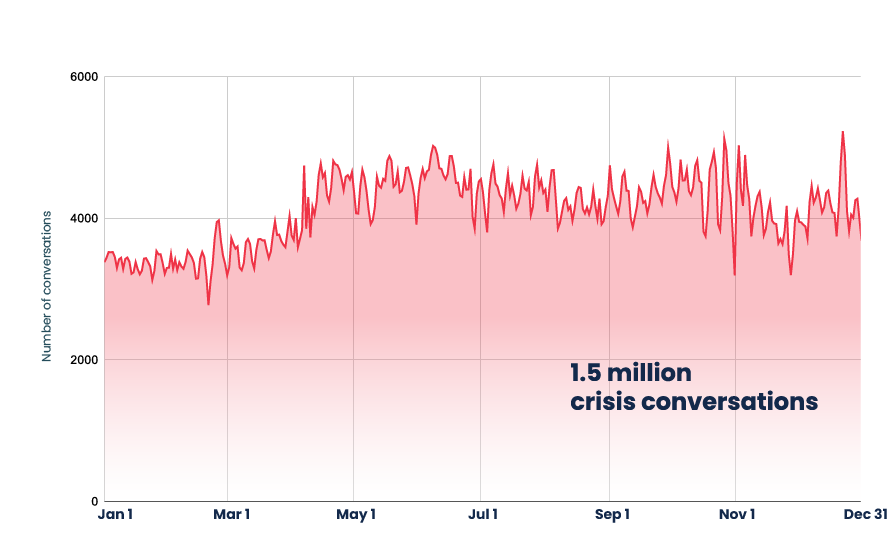
In 2025, texters needed mental health support more than ever. #
- People reached out more than 1.5 million times for support in 2025; more than in any other year.
- Relationship stress, anxiety, and suicide were the most common issues texters discussed with us.
- Among young people under 18, suicide was the most discussed issue.

In 2025, the top mental health
issues in conversations with boys and men were anxiety and stress. #
- Boys and men discussed loneliness, bullying, and substance use more than other texters.
- 1 in 3 conversations with boys under age 14 included mentions of suicide.
- Boys and men tell us they need social connection and exercise to cope.
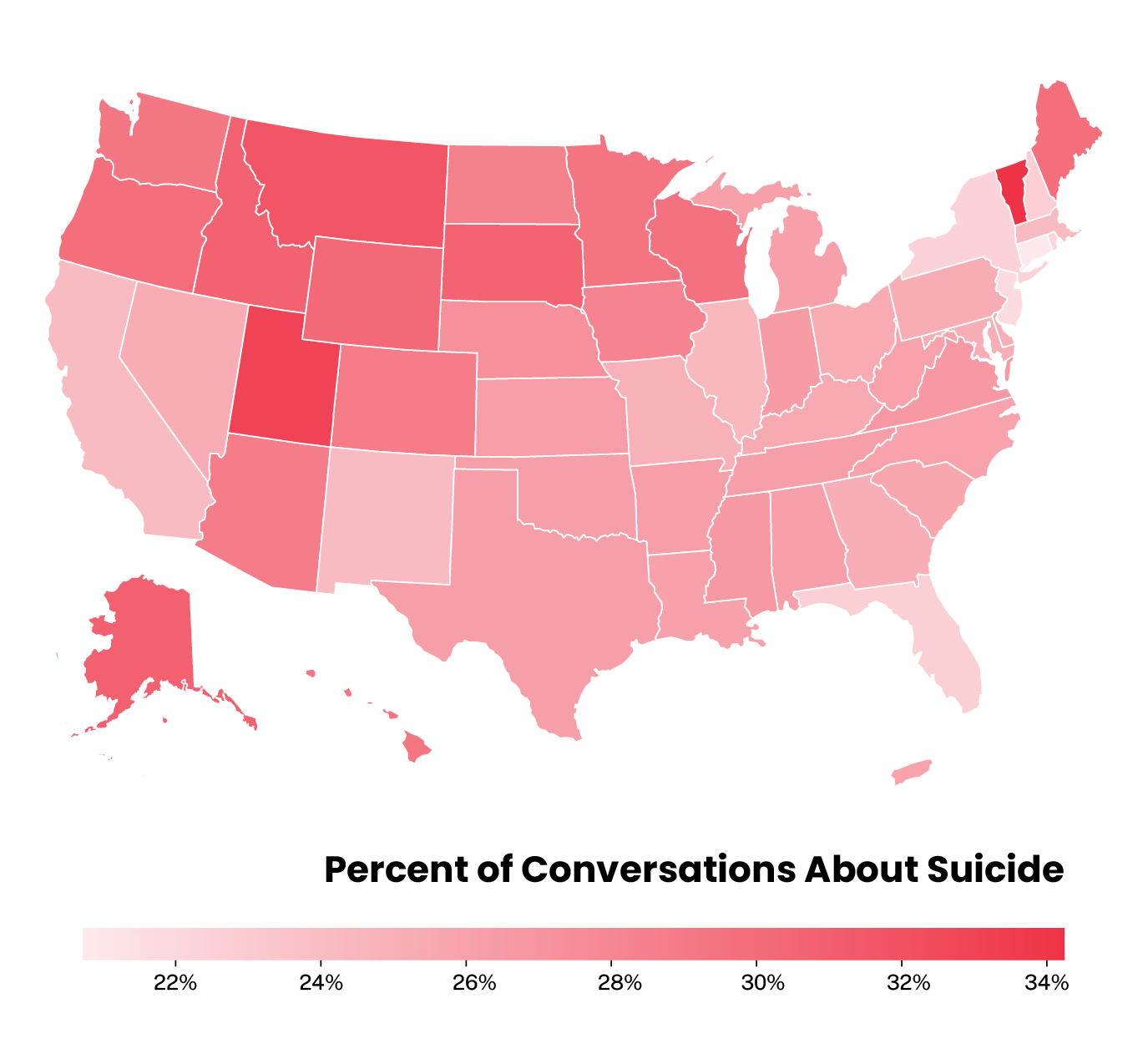
Texters from rural areas had similar mental health concerns but fewer resources to rely on, compared to other texters in the U.S. #
Our team developed methods to:
- In 2025, an estimated 12% of our conversation volume came from people living in rural areas.
- Nearly two-thirds of texters in rural areas reached out because they had no one else to talk to.
- States with large rural populations had the most conversations about suicide.

Our volunteers produced tremendous economic value for the overburdened mental health system. #
- In 2025, our volunteers donated over 700,000 hours of their time to supporting people in crisis.
- They contributed $21 million in hidden economic value to the U.S. economy.
- Women, students, and young people created the most impact.
We developed innovative ML and NLP models to push the boundaries of clinical science and drive quality improvement. #
Our team developed methods to: