Donor Spotlight: Celebrating Advocates Making a Difference
Q&A with Jesse Meyer – Finding Purpose in Showing Up for Others
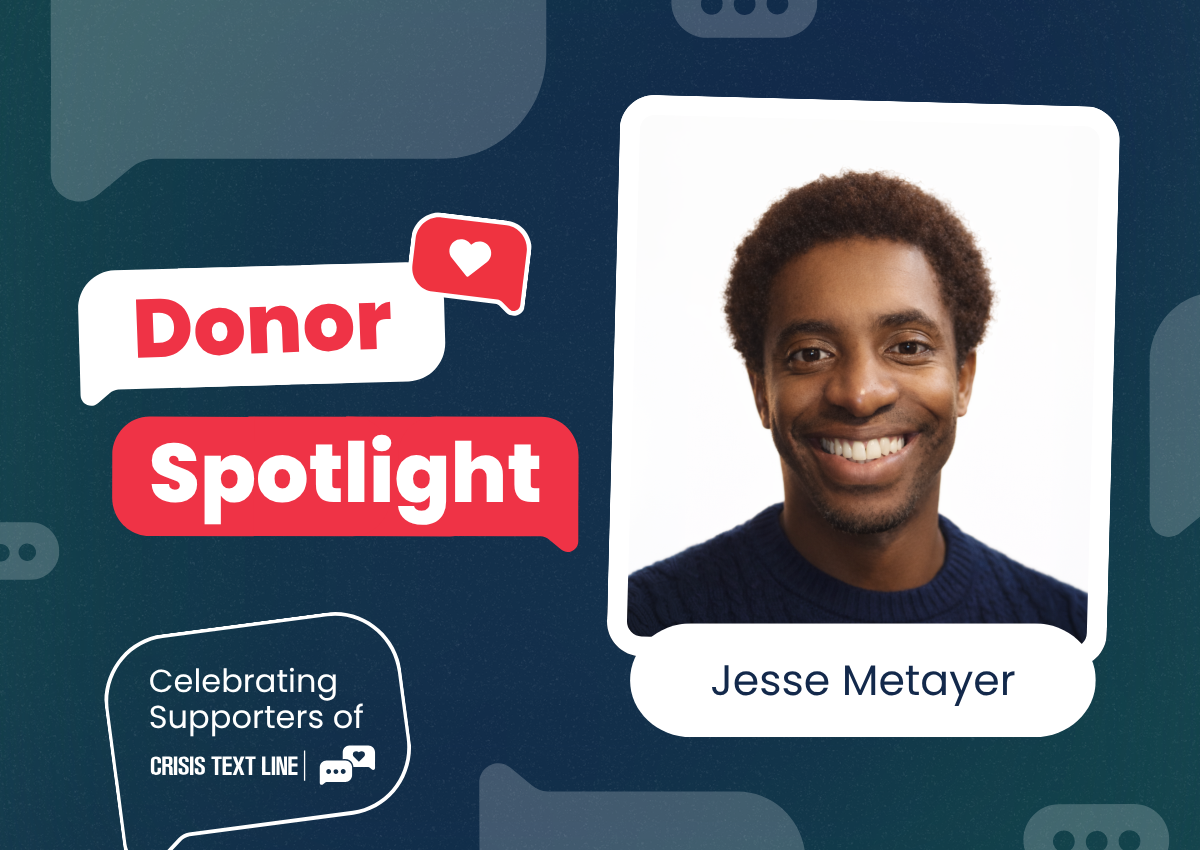
Every text we receive is answered because someone believed it mattered enough to make it possible. This month, that someone is Jesse. A donor, volunteer, and mental health advocate whose generosity helps train the Crisis Counselors who show up for texters in their hardest moments. Read on to find out how his own experience in therapy broke down a stigma he once believed, the technique he uses to turn ‘hot moments’ into ‘cool moments’ for texters in crisis, and the personal project that brings him joy and tranquility.
Q: What initially inspired you to support Crisis Text Line?
A: I spent most of my childhood feeling different. I was in learning disability classes throughout school and tried to hide how hard things were for me. I dropped out of college after 18 and started to isolate myself. In my darkest moment, I felt like there was no hope. I decided to reach out for help and that’s when things started to change. My therapist listened with empathy and provided emotional support and resources that I was able to use to improve my mental health. The experience showed me the importance of seeking professional help when you feel that all hope is lost. I used to believe that therapy was for people with severe mental illnesses, which was a stigma that is untrue. Anyone, at any given moment, can experience difficulties in life.
Q: Can you share a personal story or moment that reinforced your commitment to supporting individuals in crisis?
A: In my free 6-week training with Crisis Text Line, I learned emotional techniques, that I’ve later used with texters who reached out with their problems. By using those techniques, I’ve been able to effectively turn hot moments in initial conversations into cool moments and guide the texters to a place of empowerment by the end of our chats. I feel satisfied knowing that I can make a difference in someone else’s life.
Q: Why is it important to you to support mental health initiatives, particularly crisis intervention?
A: It’s important to support mental health initiatives because people who are suffering from emotional distress are often the first people we come in contact with. I have been trained to help those brave individuals by effectively guiding them from hot moments to cool moments and ultimately encouraging them to seek professional help right after our conversations. I learned that listening is a learned skill that teaches patience and enables us to think critically. It makes us understand a person’s words, emotions, and needs.
Q: How do you see your contributions making a difference in the lives of those reaching out for help?
A: Being there for texters reassures them that they can reach out at any time, any day, for immediate support. It’s all free. There have been times when a texter expressed gratitude at the end of our conversation. This makes me feel a sense of validation, gratitude, and self-worth. By simply being present, and listening to someone with compassion, I can help them through a difficult time. That’s why I continue to volunteer.
Q: What drives your philanthropic giving overall, and why do you prioritize Crisis Text Line in your charitable efforts?
A: I believe I’m making an impact by helping people in need. Crisis Text Line provides free 24/7 mental health support to anyone who needs it. Through my training, I’ve strengthened my listening skills and empathy while providing nonjudgmental emotional support to texters. I’ve learned a lot from my coaches and supervisors, who are readily available to answer my questions and provide support. That’s why I prioritize Crisis Text Line.
Q: How has giving back to a cause that is meaningful to you impacted you personally or professionally?
A: I feel good when I’m able to help someone who is suffering from psychological distress.
I have learned never to make decisions when my emotions are high. Slowing down helps clear my mind and strengthens my critical thinking skills. I bring that same patience and empathy to help me deal with any stressful situation in my own life. Volunteering at Crisis Text Line teaches me how important it is to listen before judging because doing so helps me understand the full picture and prevents unfair misunderstandings when helping friends and family.
Q: What would you say to others who are considering donating to Crisis Text Line?
A: I would tell them that they will be helping people who are dealing with disasters, systematic poverty, war, or other hardships. Giving our help freely ensures that those who need emotional help the most will be receiving assistance that they would otherwise be lacking if they were forced to pay for help. You are the backbone that keeps this platform free and active 24/7 for people in need of emotional support. If you’re ever struggling, please know you’re not alone and that reaching out is the first step towards hope.
Q: How do you take care of your own mental health?
A: I tend to my mental health by going to church, volunteering for Crisis Text Line, and working on my projects like StarTalk app, which gives me joy and tranquility. I also like going to the gym and taking long walks in parks.