Volunteer Spotlight: Celebrating Advocates of Crisis Text Line
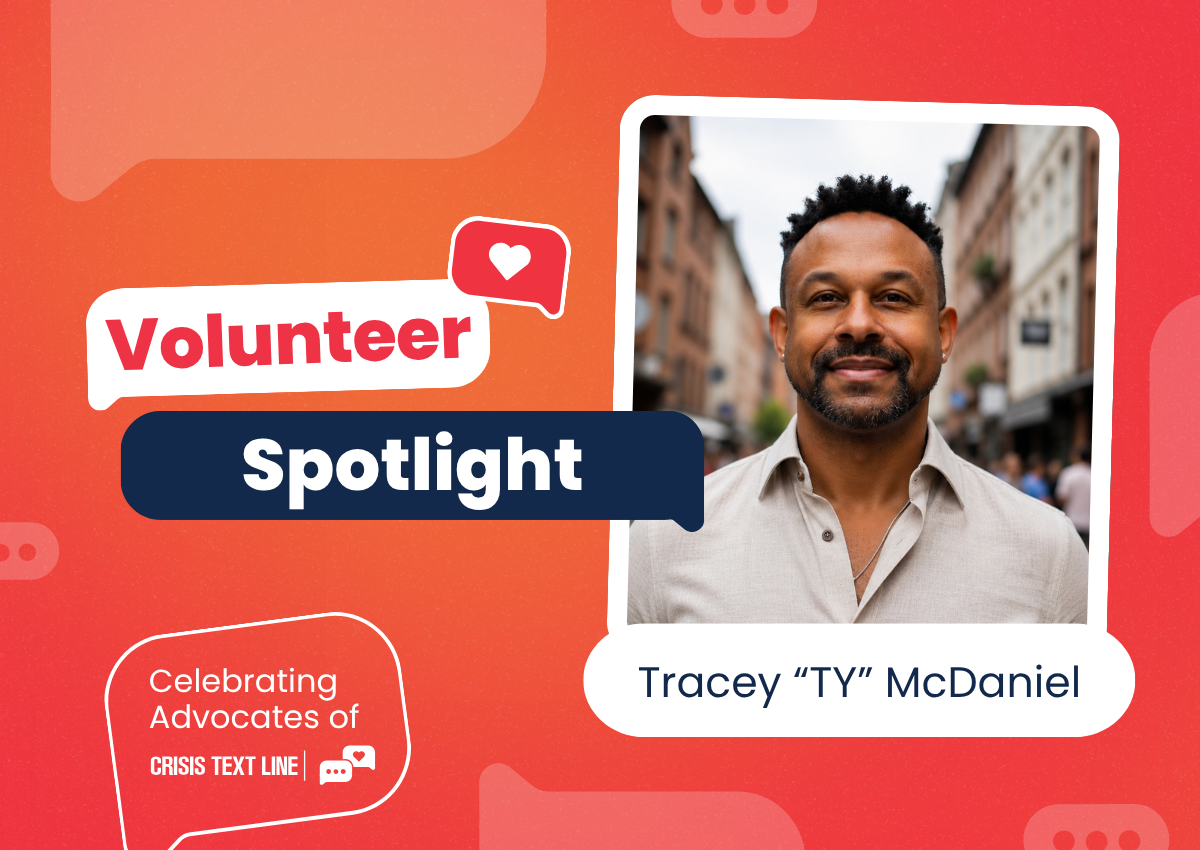
Behind every text conversation is a volunteer Crisis Counselor who showed up to listen. This month, we’re spotlighting Tracey “TY” McDaniel, a volunteer whose commitment to Crisis Text Line started with a promise to a grieving friend and has grown into a mission to remind people that asking for help is a sign of strength, not weakness. Read on to find out how a promise made to a friend after an unimaginable loss led TY to Crisis Text Line, the conversation with a bullied student that he’s never forgotten, and why he believes we all need to normalize saying “I’m not okay.”
Q: How did you first hear about Crisis Text Line?
A: I first heard about Crisis Text Line after a dear friend of mine tragically lost her son to suicide. I made a pact with her that I would help in any way I could. That promise ultimately led me to the Crisis Text Line and gave me an opportunity to turn that commitment into action.
Q: Can you share a personal story or moment that reinforced your commitment to supporting individuals in crisis?
A: Unfortunately, I’ve been personally impacted by suicide more than once. Those experiences have stayed with me, and I knew I needed to find a way to get involved and make a difference. Supporting people who may be struggling became deeply personal to me. If being there for someone during one of their darkest moments can make even a small difference, then the time I give is absolutely worth it.
Q: What does a volunteer Crisis Counselor actually do that people might not realize?
A: You aren’t expected to solve someone’s problems. Very rarely are people reaching out because they expect you to have all the answers. Often, they’re looking for a shoulder to cry on, a nonjudgmental person who will listen, and someone who can offer support, perspective, or guidance. Sometimes, you simply need to be that light at the end of the tunnel and remind them that they’re not alone.
Q: How has volunteering impacted you personally or professionally?
A: It reminds me each and every day that we all deserve a little grace, understanding, and compassion. As a people leader myself, mental health and awareness are always top-of-mind for me. I check in with my direct reports weekly to give them a chance to share how things are going, not just with their work, but with them personally. Sometimes simply asking someone how they’re doing—and genuinely listening to the answer—can make a difference.
Q: Is there a moment from your time at Crisis Text Line that’s stayed with you?
A: It was the start of the school year, and I had someone reach out because they were being bullied. I was bullied in school myself, so I remembered just how all-consuming that experience could feel. I took a deep breath and did everything I could to be a shoulder for them and create a safe space where they felt heard.
After some time, I encouraged them to tell their teacher or a school administrator and reminded them that there was absolutely nothing to be embarrassed or ashamed of. That conversation has stayed with me because I understood, in a very personal way, how much they needed someone in their corner at that moment.
Q: Why is it important to you to support mental health initiatives, especially crisis intervention?
A: I won’t sugarcoat it: life can be incredibly difficult. We are living in challenging times, and our homes, schools, and workplaces can feel like an endless stream of stressors. The ability to truly disconnect and recharge is becoming harder and harder. Our time is limited, yet there is a constant demand on our energy and attention. Social media has a profound impact on how we view the world and ourselves. When all of that begins to pile up, it can leave people feeling overwhelmed, isolated, or even hopeless.
That’s why I believe having someone there to listen, without judgment, can make such a meaningful difference. I want to be a safe space for people who are struggling or simply need a little guidance. Sometimes, just knowing someone is there to listen can be enough to help a person get through a difficult moment and see that there may be a way forward.
Q: What would you say to someone who wants to volunteer with Crisis Text Line but is worried they don’t have the right skills?
A: If you have compassion in your heart and a genuine desire to help people, the skills can be taught. You don’t have to come in knowing exactly what to say or how to handle every situation. Crisis Text Line can teach you the tools you need to be successful. What matters most is being willing to listen, learn, and be there for someone when they need it.
Q: Is there anything else you’d like to share about your story?
A: Mental health is just as important as physical health. We have to normalize asking for help. We have to normalize saying, “I’m not okay.” Asking for support is a sign of strength, not weakness.
None of us should feel like we have to go through the hardest moments of our lives alone.
If you are struggling and need to reach out to someone, Crisis Text Line is here for you. Text CONNECT to 741741 to reach a live volunteer Crisis Counselor. Free, confidential, 24/7.
Interested in sharing your story too? Each month, we will be posting stories from our community to help inspire and connect with others who may be going through similar experiences. Submit your story today! It can make a big difference in helping others feel seen, validated, and less alone.